

Written by Jervis Djokoto
Over the past two weeks, we have gathered for our Minister’s Conferences in the West and the East. Our theme was “Empowered,” and together we focused on how God empowers us to live and minister faithfully. The core framing statement for our theme was something like this:
We are empowered by God so that we may live in holy freedom, faithfully resist the enemy, and participate in His mission.
This empowerment is not something we strive to achieve; it is something we receive in and through Christ and the work and ministry of the Holy Spirit. It is, therefore, fundamentally a gift of grace. Our Western and Eastern Conferences are always slightly different, shaped by who is in the room and by our sense of God’s leading in each gathering. Yet, together, they are always a joy.
During the Eastern Conference, I found myself sitting down, looking over the room as we worshipped and sung together and reflecting again on the all-surpassing nature of God’s power toward us who believe. Ephesians 1:19 speaks of this power:
“His incomparably great power for us who believe.”
What is fascinating is the way Paul describes this power in the original Greek. There are two particularly striking places in Scripture where Paul clusters several words related to God’s power and strength within only a few verses: Ephesians 1:19 and Colossians 1:11.
When we think about being “empowered,” we do not always think about relationships. The language of power can feel impersonal—political, authoritarian, forceful, even coercive. We may imagine power expressed through control, position, or strength. But the power of God described in these passages looks very different. In Ephesians 1:19–21, Paul speaks about the immeasurable power of God at work toward believers—the same power God exercised when He raised Christ from the dead and seated Him far above every principality, authority, power, dominion, and every name that can be named.
That is resurrection power. And it is this power available to every believing Christian! Amazing! But in Colossians 1:11, Paul describes another dimension of this same divine power. He prays that believers would be: “Strengthened with all power according to his glorious might so that you may have great endurance and patience with joy.” The power that raises the dead is also the power that enables us to endure, joyfully.
I find that deeply significant.
When relationships break down, one or both people often reach a point where the words spoken, the actions taken, or the circumstances being experienced simply feel unbearable. We reach the end of, as it were, our patience. We become frustrated. We withdraw. We protect ourselves. Eventually, relationships that once mattered deeply can become casualties of our inability to endure. Yet Scripture presents endurance and patience not as signs of weakness, but as evidence of God’s empowering presence. Think about the long history of Christians who have endured persecution. Again and again throughout history, the church has demonstrated remarkable resilience under external pressure. In many places and seasons, intense opposition did not destroy the church; remarkably, the church continued to grow and bear witness.
But what sustained the church through those earliest seasons? Colossians 1:11 gives us part of the answer: the power of God that enables His people to endure. Doesn’t it strike you that it seems to take as much divine power to produce patience, endurance, and joy as it does to raise the dead? Perhaps that is because living a life of love is itself a kind of spiritual warfare. Without the empowerment of God, we cannot love one another well for very long. Frustration takes over. Resentment grows. Patience runs out. Marriages can fracture. Friendships can be broken. Churches can become divided.
This is why I believe love is one of the clearest evidences of God’s work in us.
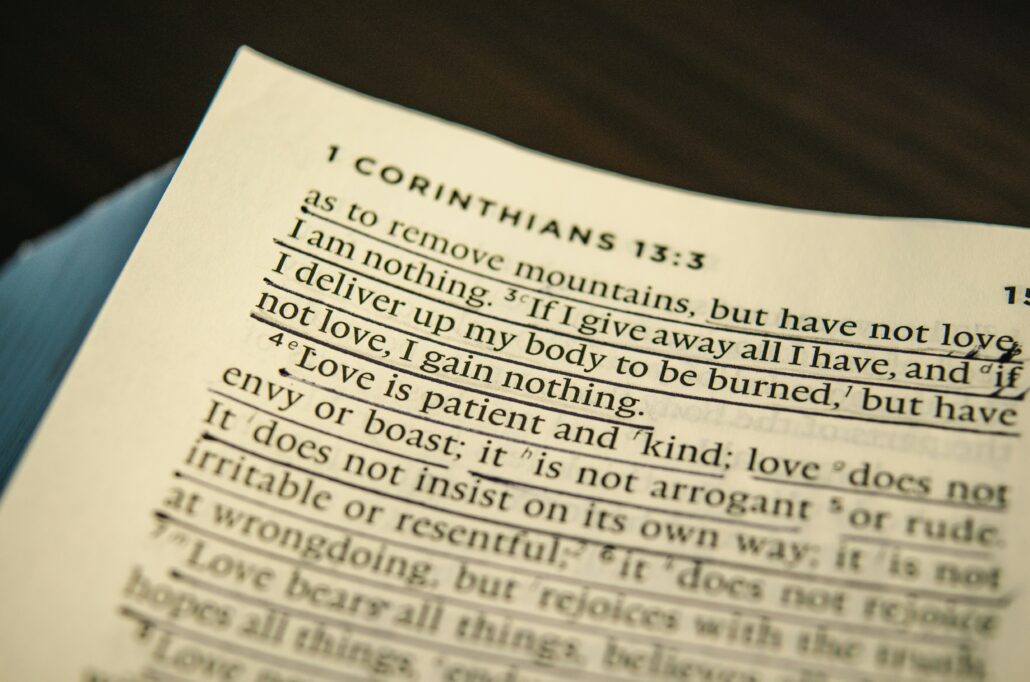
If you are empowered by God, who do you need to forgive as an act of faith in this power? Paul writes in 1 Corinthians 13:4:
“Love is patient, love is kind.”
The Amplified Bible expands the idea:
“Love endures long and is patient and kind.”
And The Passion Translation puts it this way:
“Love is large and incredibly patient. Love is gentle and consistently kind to all.”
When have you experienced that kind of “large” love without God’s help? When have you found strength within yourself to remain kind toward someone who has offended you repeatedly? When has your patience not run out with someone who has hurt you?
Sometimes we can be internally patient while remaining externally impatient. We may tell ourselves that we are “putting up with” someone while our words, tone, body language, or actions communicate something very different. Paul’s description of love challenges us at both levels. Love “suffers long”—it endures—but it is also kind. Long-suffering without kindness can become cold tolerance. Kindness without endurance can disappear when circumstances become difficult. Biblical love requires both. One definition of patience captures this well: it is the ability to exercise internal and external control in difficult circumstances, sometimes expressed through delayed action rather than immediate reaction.
That kind of love does not come naturally to us. It is the kind of love that requires the empowering presence of God.
And this brings me back to our churches. If God’s empowering presence is revealed in our capacity to endure, forgive, remain kind, and continue loving one another, then relationships cannot be separated from the health of the church.
In our next post, I want us to consider what this means for the work of church revitalization—and why relational renewal may need to come before almost everything else. Stay tuned!