

Celebrating Black History in Canada
Methodist Stories
Adapted from conversations recorded by Kingsview FMC
It’s important for us to recognize, celebrate and learn from Black Canadian history, especially because there were many historical figures who were motivated by faith to make a difference, and several whose legacies are closely tied to Methodist movements.
As people of African descent were brought to or settled in Canada, many shared or were drawn to a Methodist expression of faith. John Wesley, the founder of Methodism, was a staunch abolitionist and advocate for the end of slavery and the slave trade.
Harriet Tubman
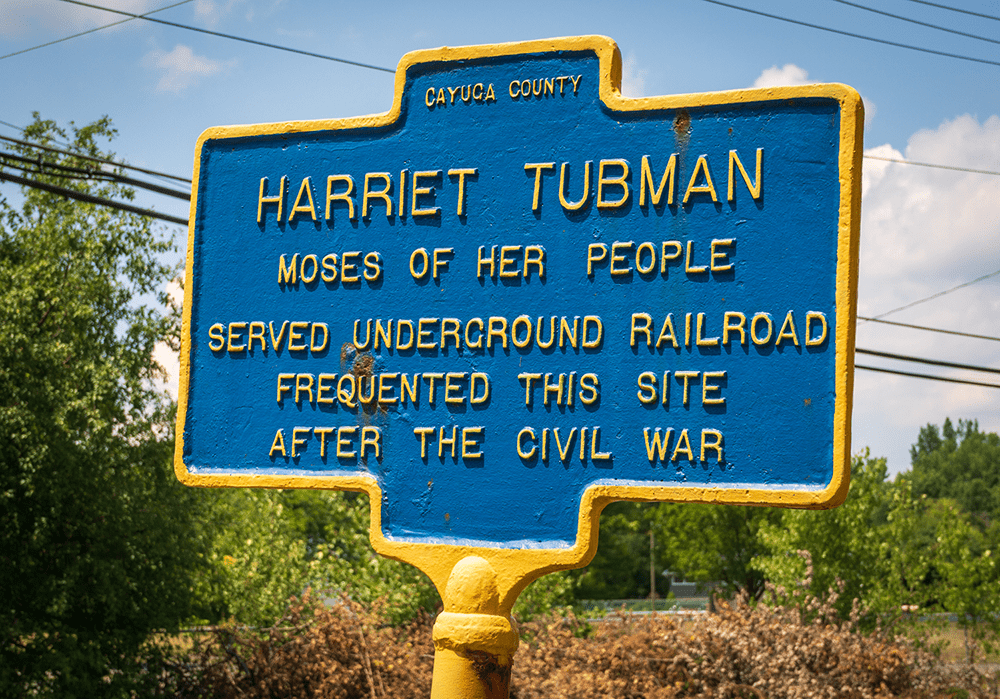
For example, Harriet Tubman, one of the most famous figures of the Underground Railroad was part of the African Methodist Episcopal (AME) Church. Harriet Tubman was an American of African descent that spent a decade in Canada, helping people escape from the U.S. following the implementation of the Fugitive Slave Act in 1850.
During her time in Canada, she lived in St. Catherine’s where many people of African descent had started to settle as far back as 1788. Many of the original freedom seekers relocated to the Golden Horseshoe region (including Toronto) and were members of the AME church. It’s important to remember that the Underground Railroad was primarily led by Christians, many of whom were Methodist because of the movements rich heritage for seeking justice in the name of Jesus!
In fact, the church that Harriet Tubman belonged to was Salem Chapel (British Methodist Episcopal Church) in St. Catherine’s, where people are still worshipping today. It’s now a historic site and the oldest black church in Ontario, first established in 1814.
Harriet Tubman was inspired by Jesus’ love for the marginalized, and like Methodists throughout history, she lived out the Gospel by engaging in social justice activities, expressing her faith through good works. She and her congregation helped welcome many enslaved African Americans that fled to Canada during the 1800s. They, and other similar congregations hosted anti-slavery lectures, civic protests and provided shelter and aid to newly arrived freedom seekers.
John Christie Holland
Another historic figure was John Christie Holland; born in Hamilton, Ontario in 1882 to Thomas and Henrietta Holland. Thomas had escaped to Canada from a plantation in Maryland at just 15 years old, and in 1860, as part of the Underground Railroad, he safely crossed the Niagara River and settled in Hamilton. Unlike many enslaved black people, John Christie Holland’s family could actually trace their family of origin back to West Africa through oral history, where his great-grandfather was taken by Dutch slave traders in 1792.
In Hamilton, the Holland family attended St. Paul’s African Methodist Episcopal Church, later renamed Stewart Memorial Church; one of the oldest black churches in Ontario, having started in the 1830s, and being the only church serving the city’s black community at that time. Thomas, the father, was the church’s choir director, and Henrietta was an officer in the church, but it was John who wanted to study theology and become a preacher.
The Holland family were very hard workers. Thomas ran a successful corner store, and yet sadly, they made little money beyond covering the basics for their nine children. All the young boys in the family and their mother worked at least one part-time job to help provide. And even though John’s teachers recognized his gifted intellectual ability, his parents were not able to pay for the university education he longed for.
But that never stopped him. From an early age, John Christie Holland helped tutor other students so that they could succeed in school. And he inherited a great singing voice from his father, and was a dedicated member of the choir. He continued to focus on others for his entire life, his professionalism, discretion and wisdom earned him the respect and admiration of many, while his selflessness earned admiration and gratitude among people of every socio-economic group. These relationships endeared him to his community, and as a result, he earned high regard from people of all ethnicities across the city of Hamilton.
It wasn’t until the Great Depression, when work was especially hard to find, that John had finally saved enough money to start university studies. While working as a janitor, he studied by correspondence and graduated from Wilberforce University in Ohio (a unique collaboration between largely white Methodist Episcopal churches and African Methodist Episcopal churches to provide post-secondary education and training for black youth). Finally, John had realized his dream and fulfilled his calling to be a pastor!
Rev. John C. Holland pastored Stewart Memorial Church in Hamilton after his ordination in 1925, becoming the senior pastor in 1937, until he “retired” in 1948. After his “retirement” he dedicated all of his time to humanitarian work. God had called and equipped John to lead the faith community that had welcomed and supported his family, and many other black families, in Hamilton before, during and after Emancipation.
Rev. John C. Holland continued to serve his community selflessly until his death in 1954. In 1953, a few months before he died unexpectedly, he was named the “Distinguished Citizen of the Year” in Hamilton. He was the first black person in Canada to receive such an award. And now annually, the Hamilton Black History Council (HBHC) hosts the Rev. John C. Holland Awards banquet. Since 1996 the HBHC has provided over 300 scholarships and awards to Black youth through the Reverend John C. Holland Awards and other platforms.

February is Black History Month
The Government of Canada
Honouring the legacy and contributions of Black people in Canada and their communities.
Black Life: Untold Stories
Black Life: Untold Stories is an eight-part documentary series that reframes the rich and complex histories of Black experiences in Canada.
A Black People’s History of Canada
Black History is Canadian History
National Film Board: Jireh Gospel: Hearts in Chorus
An intimate look inside the Jireh Gospel Choir, where voices from Montreal’s Black community unite in faith, music, and resilience.